
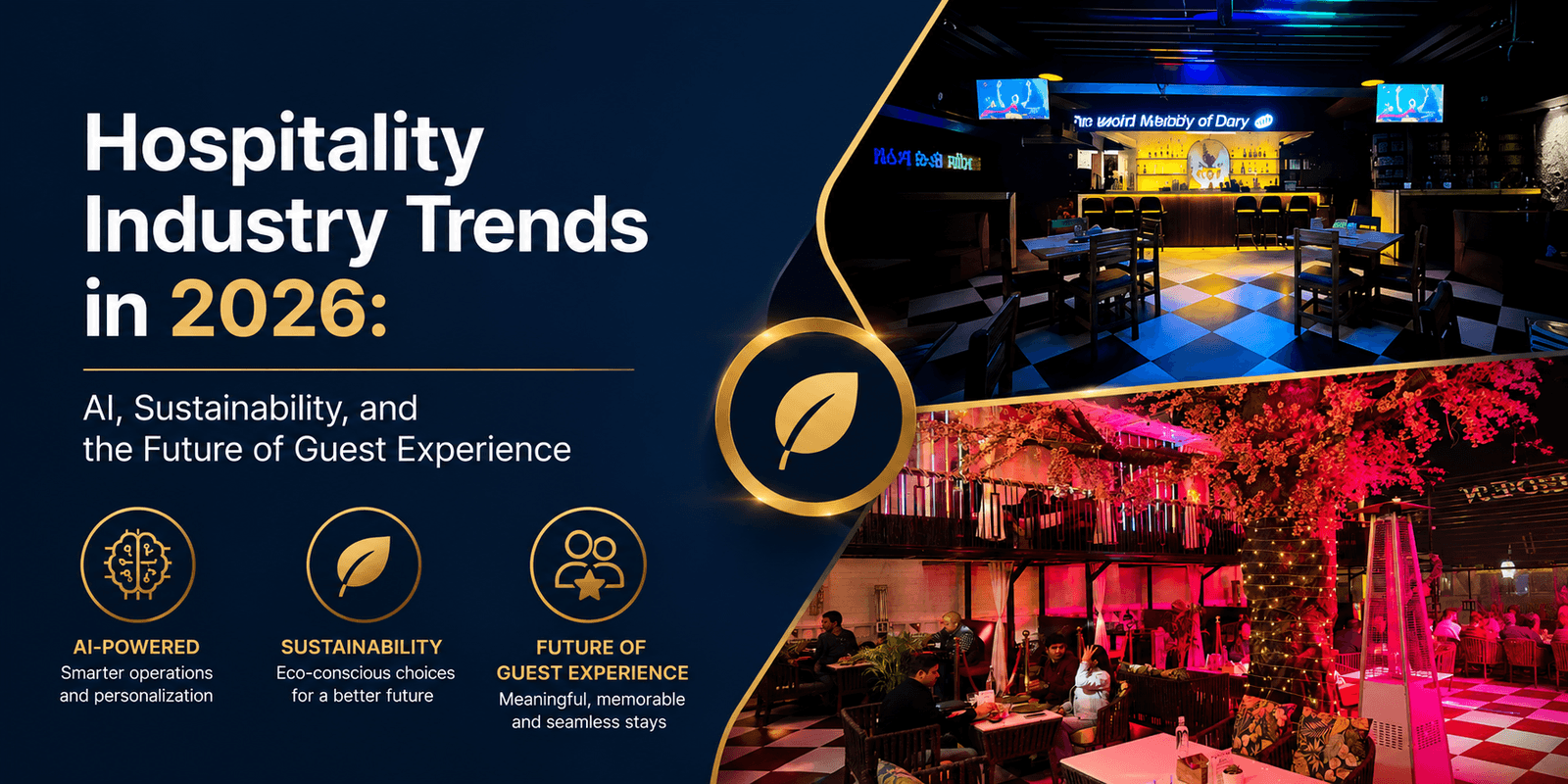
Hospitality Industry Trends in 2026: AI, Sustainability, and the Future of Guest Experience
Published: 2026-06-05 09:27:09
The hospitality sector in 2026 sits at a strategic inflection point. Global travel volumes have largely recovered from pandemic-era shocks, but the industry that emerges is materially different. Rapid adoption of artificial intelligence, an accelerating shift to sustainability as a core business imperative, and rising guest expectations for personalized, health-forward, and locally authentic experiences are reshaping revenue models, cost structures, and asset valuations. For investors committing significant capital, understanding these trends is essential to maximizing returns and avoiding stranded assets.
Macro drivers and market outlook
- Demand recovery and segmentation. Leisure travel rebounds strongly; business travel gradually returns but shifts toward fewer, higher-value meetings. The market is increasingly segmented by experience (luxury wellness, experiential boutique, extended-stay workcation), creating niche growth pockets that outpace traditional full-service models.
- Capital inflows and consolidation. Private equity and institutional capital continue to target fragmented regional operators and prop-tech-enabled platforms. M&A activity favors groups that can scale tech and sustainability investments across portfolios to capture operating leverage.
- Cost pressures and supply-chain constraints. Labor availability, energy costs, and supply-chain volatility (equipment, construction materials) make operational efficiency and energy resilience high priorities.
Why AI matters to investors
Artificial intelligence is not a novelty; it’s now a value driver that affects top-line growth and bottom-line efficiency across hotels and travel businesses.
- Revenue upside. AI-driven personalization increases conversion rates and ancillary spend through targeted offers, dynamic upsells, and better loyalty segmentation. Case studies show personalization lifts direct booking conversion and ancillary revenue by mid-to-high single digits—a material EBITDA lever when scaled across a portfolio.
- Cost reduction. AI optimizes staff scheduling, predictive maintenance, and housekeeping routing, lowering labor and maintenance costs while improving service consistency. Automated revenue management systems that ingest real-time local signals (events, weather, flight availability) can boost RevPAR (revenue per available room) by optimizing allocation across channels.
- Due diligence implications. Investors should evaluate portfolio companies’ data readiness (CRM, PMS, POS integration), vendor lock-in risks, and the maturity of AI stacks. Capital allocation toward AI should prioritize modular, interoperable platforms with clear ROI tracking.
Investors looking to maximize returns should also understand modern hotel revenue management strategies and how technology is transforming property performance.
Sustainability as a value-creation strategy
Sustainability has moved from PR to profit and risk management. For large investors, sustainability investment improves margins, access to capital, and exit valuations.
- Operational savings and capex trade-offs. Investments in LED lighting, efficient HVAC, building management systems, water recycling, and onsite renewables reduce energy and operating costs. Payback periods typically range from 3–7 years, depending on local energy prices and incentives.
- Regulatory and financing tailwinds. Green building certifications (LEED, BREEAM, EDGE) and verified carbon reductions increase attractiveness to ESG-focused lenders and funds, enabling lower-cost financing or green bonds.
- Market premium and demand signals. A growing segment of guests chooses properties with transparent sustainability claims, enabling premium pricing and stronger loyalty. However, avoid greenwashing; measurable KPIs and third-party verification are critical.
- Investment checklist. Prioritize properties where retrofits have clear IRR, where local incentives or net-metering apply, and where long-term leases or operating agreements allow investors to capture savings.
Many investors are now prioritizing sustainable hospitality practices to reduce operational costs while meeting growing ESG expectations.
Operational and workforce transformation
Automation, robotics, and reskilling reshape operating models—and require thoughtful capital deployment.
- Labor mix shifts. Routine tasks are increasingly automated (self-check-in, robotic delivery, automated inventory management), enabling staff to focus on high-touch services that drive guest satisfaction.
- Training and retention. Capital for tech must be paired with investment in reskilling programs to reduce turnover and maintain service quality; ignored, these issues can erode projected efficiencies.
- Asset-level decisions. Decide where to deploy full automation (e.g., limited-service, select-service segments) vs. human-centric luxury segments where guest contact is a value proposition.
Guest experience trends that drive willingness to pay
Investors should prioritize experiences that create durable, monetizable differentiation:
- Hyper-personalization. Guests expect offers tailored to their preferences and life stages. Properties that integrate CRM, guest profiles, and AI-driven recommendation engines can raise average spend per stay.
- Health and well-being. Post-2020, health credentials, superior air quality, sleep optimization, and wellness programming unlock premium rates and longer stays, especially in the premium/luxury and extended-stay segments.
- Localized experiential offerings. Authentic, locally curated experiences boost ancillary revenue and lengthen stays. Partnerships with local F&B, tours, and cultural providers require low capex and high yield.
- Flexible formats. Hybrid hospitality (co-working floors, subscription memberships, long-stay modules) increases occupancy during shoulder seasons and attracts remote workers willing to pay for blended work-leisure offerings.
Technology stack and integrations to evaluate
When assessing a business for investment, examine the tech stack and integration roadmap:
- Core systems: Property Management System (PMS), Central Reservation System (CRS), Revenue Management System (RMS), Point-of-Sale (POS), and Customer Relationship Management (CRM).
- Data fabric: Real-time middleware or API layer that enables data exchange between systems so AI models can access inventory, pricing, guest profiles, and local signals.
- AI capabilities: Personalization engines, demand forecasting models, dynamic pricing, and operations optimization (housekeeping, predictive maintenance).
- Cybersecurity and privacy: Compliance with local data protection regulations, robust encryption, and consent management—especially critical when deploying AI-based personalization.
- Vendor considerations: Prefer modular SaaS providers with transparent pricing and SLAs; avoid overreliance on developer-heavy bespoke systems that increase technical debt.
Financial performance metrics and modeling implications
For investors, the key is translating these trends into forecastable financial outcomes:
- Revenue levers: Direct booking growth, ancillary revenue per guest (F&B, experiences), length of stay, and occupancy optimization through dynamic pricing.
- Cost levers: Labor productivity gains, energy savings, maintenance deferment via predictive maintenance, and lower distribution costs when direct channels improve.
- Capital requirements: Initial capex for tech integration, sustainability retrofits, and experiential amenities; ongoing SaaS and training expenses.
- Valuation impact: Properties with demonstrable tech-enabled revenue uplift and verified sustainability performance often achieve higher EBITDA multiples and attract strategic buyers and ESG-focused capital.
Risks and mitigation strategies
- Integration risk. Fragmented legacy systems can stall AI and automation benefits. Mitigate with staged rollouts, API-first solutions, and vendor escrow provisions.
- Talent gap. Difficulty hiring or retraining staff can reduce projected efficiency gains. Build partnerships with training providers and allocate budget for reskilling.
- Regulatory and reputational risk. Data breaches or unverified sustainability claims damage brand value. Invest in compliance, third-party audits, and transparent reporting.
- Demand shocks. Economic downturns or travel restrictions remain possible. Stress-test models with conservative occupancy scenarios and maintain liquidity buffers.
Actionable investment recommendations
Prioritize assets with high retrofit ROI. Target properties where energy and operational upgrades produce 3–5 year paybacks and where lease structures or management agreements allow investors to capture savings. View Here
Invest in data readiness first. Before large AI projects, ensure portfolio companies have unified guest data, a reliable PMS, and a CRM integration strategy.
Allocate for guest-facing differentiation. Reserve capital for wellness amenities, localized experiences, and flexible workspace conversion in properties located near demand generators.
Use platform plays for scale. Consolidating multiple assets under a central tech and sustainability program unlocks operating leverage and simplifies measurement of KPIs across the portfolio.
Structure earnouts and performance-based incentives. Tie management fees and vendor payments to measurable outcomes—RevPAR growth, cost savings, carbon reduction—to align incentives.
Case illustration (concise)
A mid-sized regional portfolio upgraded its PMS/CRM, deployed an AI-driven RMS, and invested in LED/HVAC retrofits across 30 properties. Within 18 months, they saw a 6% RevPAR uplift from smarter pricing and direct-booking conversion, a 12% reduction in energy spend, and higher ancillary revenue from curated local experiences—outcomes that materially improved NOI and justified a higher exit multiple from strategic buyers.
Due diligence checklist for investors
Technology: Inventory of core systems, API availability, recent integrations, and vendor contracts.
- Data governance: Policies on consent, retention, security, and privacy compliance.
- Sustainability: Baseline energy/water use, existing certifications, retrofitting roadmap, and local incentive opportunities.
- Workforce: Labor contracts, turnover metrics, and training programs.
- Market fit: Demand segmentation, local competition, and distribution channel mix.
- Financials: Detailed RevPAR drivers, ancillary revenue breakdown, and sensitivity analyses for occupancy and ADR.
Conclusion: invest in transformation, not replication
In 2026, winning hospitality investments will be those that treat technology and sustainability as core value-creation levers rather than optional enhancements. For major investors, the path to superior returns lies in platform consolidation, disciplined capex allocation (favoring high-IRR retrofits and scalable SaaS), and rigorous measurement of guest-facing outcomes. Allocate capital to data readiness first, pair tech with workforce investments, and demand transparency in sustainability claims. That disciplined approach reduces risk, improves margins, and creates a portfolio that’s resilient to both regulatory changes and shifting guest expectations.